

This post contains affiliate links. We will be compensated if you buy after clicking on our links, at no extra cost to you.

As a professional groomer, I’ve had the pleasure of working with countless Siberian Huskies over the past few years, and I know how much upkeep it can take to keep their coats in excellent condition. I also am very familiar with all the screaming and howling they do while in the bath! For being snow dogs, you’d think they wouldn’t mind a little bit of water! 😂
So, besides earplugs, the next most important tool in your grooming kit will be a good brush. But with so many different types of brushes available, choosing the right one for each dog’s coat type can be overwhelming. But before we really dive in, I want to share my all-time favorite brush for huskies! The one brush I truly can’t go without is the undercoat rake from Master Grooming Tools.
In addition to the undercoat rake, I’ll share some of my top recommendations for brushes that work exceptionally well on Siberian Huskies. From slicker brushes to combs, I’ll cover the pros and cons of each type of brush to help you choose the best one for your husky. So, whether you’re a fellow groomer or a husky owner looking to up your grooming game, keep reading to discover the best brushes for huskies.
5 Best Brushes for Huskies
Here is my list of the 5 best brushes for huskies. Note that each brush has a different purpose.



-
 5.0$26.00
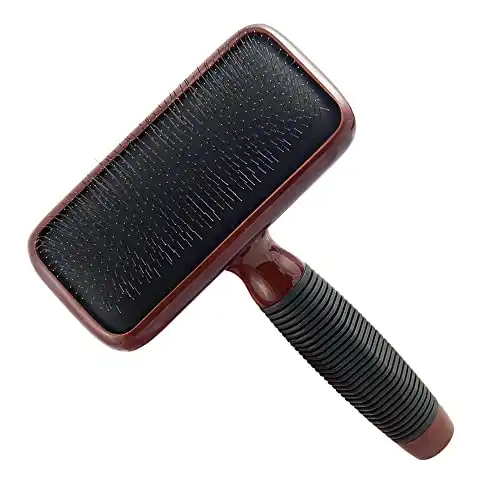
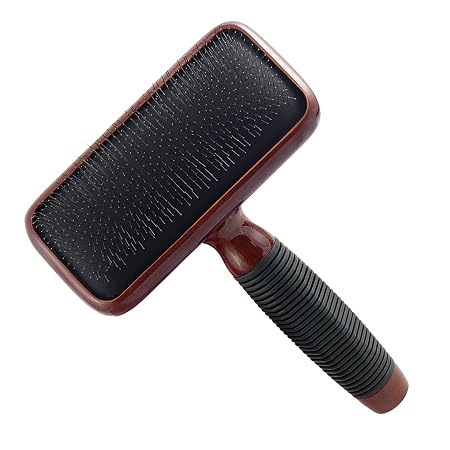
Let's get started with an amazing slicker brush. The slicker brush by Kenchii is definitely a fan favorite in the grooming world and for husky owners. It works great for all over the dog's body and helps loosen and remove tangles and mats.
I personally reach for this brush when I first start brushing a husky. It helps me get a better feel for how much the dog is shedding and helps really loosen some of that stubborn shedding fur.
Buy on Amazon Buy on ChewyPros:- The handle has a soft non-slip grip that is really comfortable
- The pins are slightly rounded so they don't scratch your dog's skin
- Loosens and gets out mats quite easily
Cons:- Some might find that the brush is too soft for especially coarse coats
We earn a commission if you make a purchase, at no additional cost to you.
03/18/2024 12:10 am GMT -
 5.0$12.31
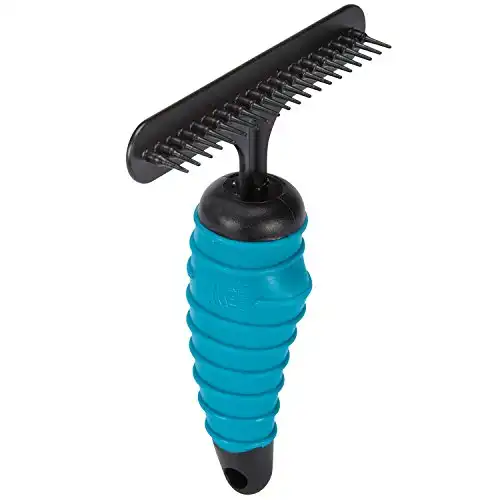
Now on to my favorite! This undercoat rake is so comfortable to hold. It was actually designed by groomers to help reduce the risk of repetitive motion injury.
The teeth of the rake are far enough apart that the rake can go through tough compacted areas of fur quite easily to make brushing easier. And as it is breaking up those tough spots, it gets out so much loose, dead fur!
Buy on Amazon Buy on ChewyPros:- Ribbed rubber non-slip grip that is incredibly comfortable
- Quickly and easily removes loose undercoat and stubborn compacted areas
- Doesn't scratch the dog's skin
Cons:- Not ideal for puppies or dogs with thinner coats
We earn a commission if you make a purchase, at no additional cost to you.
03/18/2024 12:25 am GMT -
 5.0$14.99
This grooming rake is an absolute must-have during the shedding seasons for huskies. I know it definitely looks daunting, but it works so well! The rake has 13 stainless steel "blades" that help get through tough mats.
And though these blades look intimidating, they are actually rounded, so they can't harm you or your dog. It doesn't cut the fur like other tools can but instead helps loosen and pull out the dead, loose fur.
You almost won't believe how much fur you can get out, especially when your husky is blowing its coat!
Buy on AmazonPros:- Gets down close to the skin to break apart mats
- Also helps keep mats from forming when used regularly
- You'll have a dog-sized pile of fur next to your husky when you're done!
Cons:- Not ideal for really short coats
- If used on thin areas that aren't shedding much, it can pull out too much fur
We earn a commission if you make a purchase, at no additional cost to you.
03/18/2024 12:30 am GMT -
 5.0
5.0$26.90$23.99Here is another very unique looking tool that I absolutely love. This isn't necessarily an everyday brush for huskies, though. Instead, it's best to use it during shedding seasons or when you've gone too long without brushing.
It is designed to break up those mated and compacted areas of fur that huskies seem to always get. I've found that the ideal place to use this is on their back end since that is where the fur always seems to get the most compacted.
Buy on Amazon Buy on ChewyPros:- Breaks up large mated and compacted areas into more manageable sections
- Helps cut out dead, loose fur
- Comfort grip handle
Cons:- Not ideal for small mats
- Can be sharp and should be used with caution
We earn a commission if you make a purchase, at no additional cost to you.
03/18/2024 12:50 am GMT -
 5.0
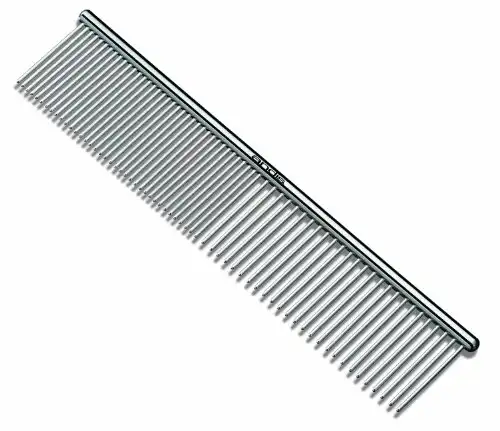
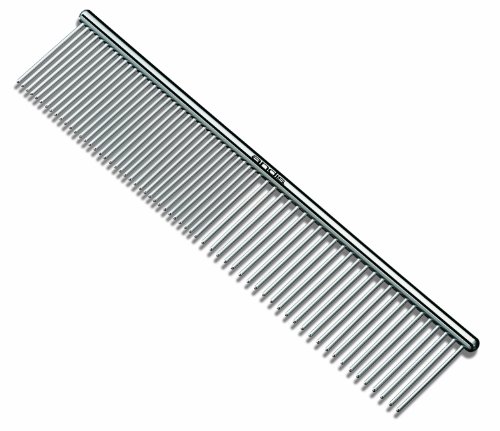
5.0$18.05$13.66Last but not least is the steel comb, a tool every groomer and husky owner must have in their grooming kit. Even if you don't have any other tools, you can significantly reduce shedding in a husky with just this one comb!
It works great at smoothing out the top coat, getting down close to the skin to stimulate the hair follicles and distribute the oil on the skin, and even works as a deshedding tool to remove thick undercoat.
My favorite way to use this comb though is as a tool to check my work. If I can't get this comb down to the skin and through the coat with no resistance, then I know I need to get busy brushing!
Buy on Amazon Buy on ChewyPros:- Great for undercoat removal
- Great for sensitive dogs as it is very gentle
- Helps you check your work as you go
Cons:- Not ideal for shorter coats
We earn a commission if you make a purchase, at no additional cost to you.
03/18/2024 12:20 am GMT
Guide to Buying Dog Brushes for Huskies

Importance of grooming a husky
Regular grooming is necessary to maintain the health and appearance of a husky. Without properly grooming your husky, the coat can become matted and dirty, which can cause discomfort and even skin problems.
Grooming or brushing your husky regularly is also essential to manage husky shedding. Huskies shed heavily twice a year, and daily brushing during this time can help to remove loose fur and prevent it from accumulating in your home.
Additionally, regular brushing can help distribute natural oils throughout the coat, keeping it healthy and shiny.
Different types of brushes for huskies
Here are the different types of brushes for huskies; each with its own purpose.
Slicker brush
A slicker brush has thin, short wires that are close together and angled slightly to the brush head. It is ideal for removing tangles, mats, and loose fur from the undercoat of a Siberian Husky.
Undercoat rake
An undercoat rake has long, widely spaced teeth designed to reach deep into the undercoat to remove loose fur and prevent matting. It is useful for thick, heavy coats like those of Siberian Huskies.
Deshedding tool
A de-shedding tool has a sharp edge that cuts through the undercoat without damaging the topcoat. It is designed to remove loose fur and reduce shedding, which can be a major problem for Siberian Huskies.

Comb
A comb has widely spaced teeth on one end, and teeth close together on the other end. Combs can be useful for gently detangling the coat, particularly if there are large mats or tangles.
Coat types
Standard coat
This is the most common type of husky coat, consisting of a thick, double-layered coat with a soft undercoat and a longer, coarser outer coat. The fur is usually shorter on the dog’s head and legs and longer on the back and sides.
Woolly/long coat
This type of coat is similar to the standard coat, but the undercoat is much denser and softer. This gives the fur a woolly texture, hence the name. The wooly husky has an especially thick coat around the neck and shoulders, giving the appearance of a mane. The fur on the body is also longer and more flowing, with feathering on the tail and legs.
Short coat
Some husky mixes may have short coats and may not have the characteristic fluffy, thick coat of a purebred husky. Short haired husky mixes are often more adaptable to warmer climates and may require slightly less grooming than a purebred husky.
Comfort and safety
Comfort and safety are essential considerations when selecting brushes for huskies. Using the wrong type of brush can cause discomfort and even harm to the dog’s skin and coat.

Here are some things to keep in mind when selecting brushes for huskies:
- There are different types of brushes available for different stages of grooming. A slicker brush is ideal for removing loose undercoat, while a dematting comb or tool is meant to be used on thick undercoats. It’s important to choose a brush that’s appropriate for the dog’s coat type and needs.
- Next, look for a comfortable and safe brush design. It should be comfortable and safe for both the dog and the groomer. The brush should have soft, rounded bristles or pins that won’t scratch or irritate the dog’s skin, like the Kenchii slicker brush. It should also have an ergonomic handle that provides a good grip and prevents wrist strain.
- Also, make sure that dematting tools aren’t too sharp, and be sure to use them with caution so as to not hurt yourself or your dog.
Quality and durability
Of course, check for durability when buying a brush. There’s no sense in buying a tool that is going to fall apart after just a few uses. Instead, look for a good quality brush. A good quality brush will be durable and long-lasting. Check the materials and construction of the brush to ensure that it can withstand frequent use and won’t break or wear out easily.
Budget
There is a wide range of grooming tools and price ranges when it comes to those tools. I’m a believer that it should not cost an arm and a leg just to brush your dog! That being said, though, it is far better to spend a little bit more if you are able to choose a brush that is of high quality and durable so that it will last for a long time.
A good brush is an investment! That being said, keep an eye out for deals and discounts that may be available from online retailers or pet supply stores. You may be able to find a good quality brush at a lower price during a sale or promotion.
And before making a purchase, compare the prices of different brushes from different brands to find one that fits your budget. While budget is an important consideration, it’s essential to choose a high-quality brush that’s comfortable and safe for your husky and one that will last.
Final thoughts: What is the best brush for your husky?
Having tried and tested various brushes and grooming tools, I can confidently recommend the Kenchii slicker brush for removing loose hair and mats, the 13-blade double coat rake, the de-matting comb, and the undercoat rake for tackling the thick undercoat, and the Andis comb for adding a final shine to your husky’s coat.
Every husky can have a coat that is different from the next, but every single one of these tools has been a big help in the salon. So, from my experience as a professional groomer and grooming huskies, I recommend these as the best brushes for huskies.
What other brushes have you tried?
Share your experience, whether good or bad, in the comment section below.
Further reading:
FAQ
What kind of brush should I use on my husky?
When grooming a husky, a slicker brush is often the best choice. Slicker brushes are designed to remove loose fur and mats without damaging the dog’s coat. They typically have fine wire bristles that are close together, making them ideal for removing loose undercoat fur and reducing shedding.
Are Furminators good for huskies?
The Furminator is designed to remove loose undercoat, which can help reduce shedding and prevent matting. However, I am not a big fan of the Furminator tool because I’ve found that it can easily cause skin irritation if used improperly or too frequently. I’ve also found that it cuts through the topcoat as well as the undercoat, causing the topcoat to become too thinned out. Instead, I prefer an undercoat rake or slicker brush.
What is the most effective way to brush a husky?
To effectively brush a husky, start by using an undercoat rake to remove dead hair from the undercoat. Then, use a slicker brush to remove any tangles or mats from the topcoat. Pay attention to problem areas such as behind the ears, under the legs, and on the tail and rear end. Finish by combing through the fur.
How often should you brush a husky?
Most sources say a husky needs to be brushed at least once a week. But to really keep the coat in good condition and reduce loose fur from flying all around your home, Huskies should be brushed two to three times a week. Or more! Brushing frequently for five to ten minutes at a time is better than brushing for hours at a time less frequently.
